
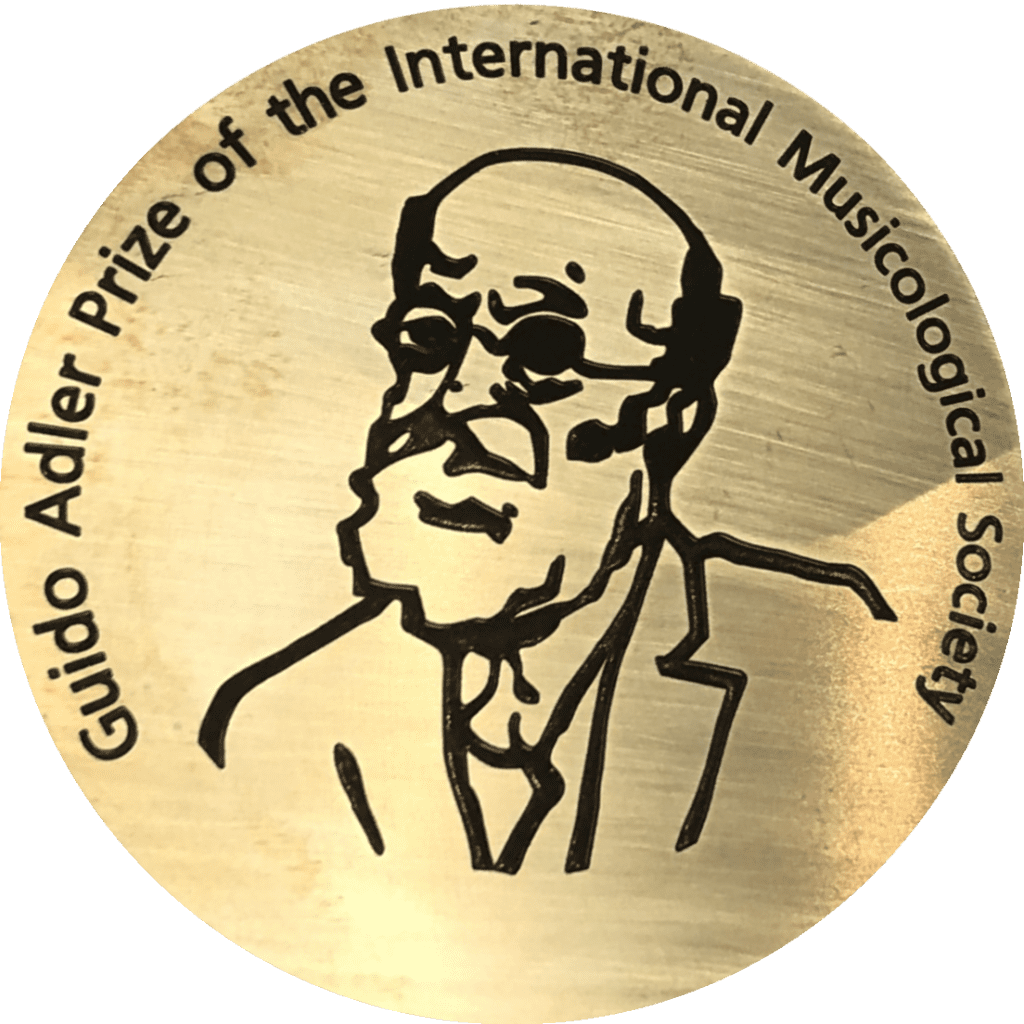
In 2018 the International Musicological Society inaugurated the IMS Guido Adler Prize (IMS GAP), named after Guido Adler (1855–1941), a pioneer of our discipline and also the honorary president of the IMS when the society was founded in 1927. The IMS GAP honors distinguished scholars who have made an outstanding contribution to musicology.
Awardees of the IMS Guido Adler Prize

Emilio Casares Rodicio
IMS GAP 2025 Awardee

Georgina Born
IMS GAP 2024 Awardee

Kofi Agawu
IMS GAP 2023 Awardee

Hermann Danuser
IMS GAP 2023 Awardee
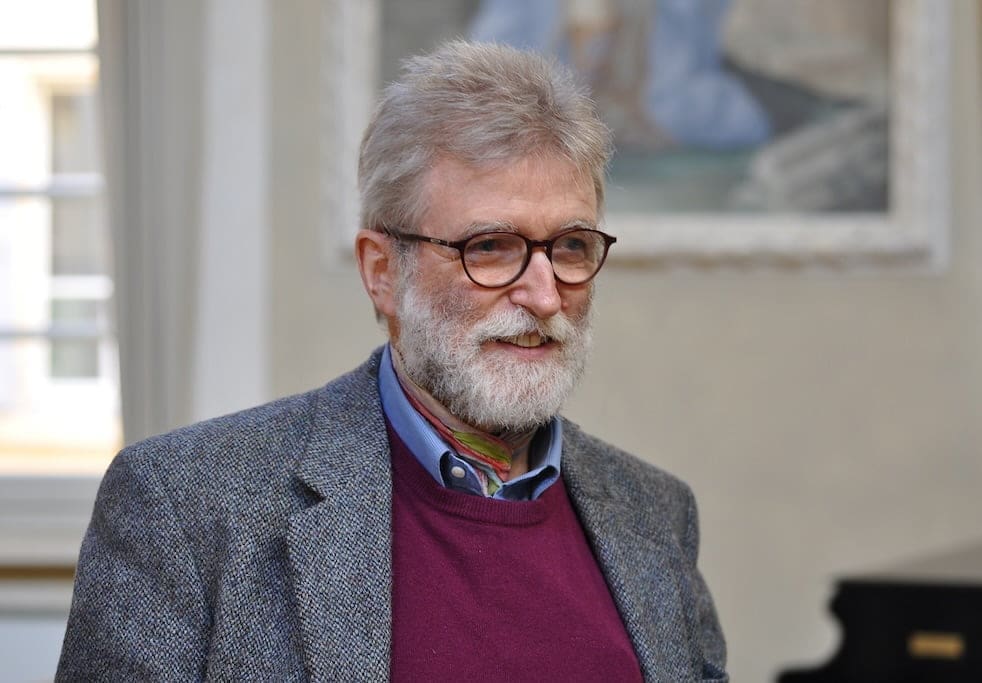
Lorenzo Bianconi
IMS GAP 2021 Awardee

Yoshihiko Tokumaru
IMS GAP 2021 Awardee

Margaret Kartomi
IMS GAP 2019 Awardee

Margaret Bent
IMS GAP 2018 Awardee

Lewis Lockwood
IMS GAP 2018 Awardee
Emilio Casares is one of the most significant pioneers of musicology in contemporary Spain. Since the commencement of his career in 1975, he has been one of the most dynamic figures of Spanish musicology, invigorating nearly every dimension of musicological research in Spain and the Spanish-speaking world. His work and influence has extended into many areas through tertiary education, research, entrepreneurial activity, the internationalization of Spanish musicology, the revival of the music of 19th-century Spain, and as an indefatigable champion of Spanish music. His distinguished career is marked by a number of firsts: first professor (catedrático) of musicology in any Spanish university (Oviedo, 1982); founder/director of the first musicology department at a Spanish university (Oviedo, 1984); inaugural professor of Musicology, Universidad Complutense de Madrid and founding director of the Instituto Complutense de Ciencias Musicales (ICCMU), which he led 1989–2014; and creation of the Department of Musicology at the Universidad Complutense (1996).
Among his many achievements, we especially recognize his leadership in the publication of the ten-volume Diccionario de la música española e hispanoamericana; the publication of a series of textbooks to support secondary school education throughout Spain; revival of the zarzuela (a genre of more than 14,000 surviving works) through the publication of the first full scores of zarzuelas and collaboration with arts institutions in producing the first modern performances; and the revival of 19th-century Spanish orchestral and chamber music. Across his career, he has fostered the creation of a network of scholars throughout the Spanish-speaking world, which has been foundational to the development of contemporary Hispanic musicology and catalyzed the creation of bodies such as our own ARLAC regional association.
Committee: Federico Celestini (AT, chair), Malena Kuss (US), Théodora Psychoyou (FR), Valentina Sandu-Dediu (RO), Imani Sanga (TZ)
Georgina Born is a musicologist whose disciplinary innovations have established new research trajectories for musicologists around the world. Her main interest lies in analyzing the cultural meaning of music, particularly how this meaning is influenced by musical institutions and the relationships between human and nonhuman actors involved in the processes of musical production, reception, and mediation. Her highly regarded first book, Rationalizing Culture: IRCAM, Boulez, and the Institutionalization of the Musical Avant-Garde (California, 1995), was a landmark publication, followed in 2004 by Uncertain Vision: Birt, Dyke and the Reinvention of the BBC (Vintage, 2004). In recent years, she has devoted major studies to the role of technologies in the formation of musical meanings. Throughout her work, Georgina Born has developed methodologies that cross the boundaries between disciplines, integrating approaches from anthropology, historical musicology, sociology, and ethnomusicology. The perspective of her research is global, focusing on forms of cultural representation within processes of cultural mediation.
Georgina Born is professor of anthropology and music in the Department of Anthropology, University College London, and has held numerous guest professorships. She studied cello and piano at the Royal College of Music, and during the 1980s appeared with numerous experimental music groups, making a number of recordings. Her scholarship has been recognized with a Dent Medal of the Royal Musical Association in 2007, a Fellowship of the British Academy in 2014, and an OBE in 2016 “for services to anthropology, musicology and higher education.” Her service to musicology has been extensive, as a guest professor and as the editor of several field-defining collections, the latest of which is Music and Digital Media: A Planetary Anthropology (UCL Press open access, 2022).
Committee: Federico Celestini (AT), Maria Rosa De Luca (IT, chair), Valentina Sandu-Dediu (RO), Imani Sanga (TZ)
Kofi Agawu has completely transformed the fields of music theory and ethnomusicology with his research. A native of Ghana, he received his PhD at Stanford University. As a result he is equally at home in Ghana, where he regularly teaches, and in the US, where he is distinguished professor of music at the Graduate Center of the City University of New York. Agawu pursues research in two distinct areas, music analysis theory (where he concentrates on questions of analytical method) and West African music (where he focuses on the relationship between music and language, rhythm, and issues in post-colonial representing of African music). Beginning with his highly regarded book on African Rhythm and continuing with his award-winning The African Imagination in Music, he has established new spaces and working methods for music analysis based on close readings of musical materials and attention to rhythm and intonational patterns in language (spoken, sung, performed). The post-colonial historiography that underpins The African Imagination poses penetrating questions informed by a life lived on three continents and a deep appreciation of African and European musics that is hugely refreshing. His scholarship has been recognized with numerous honors and awards, including the Dent Medal and a Guggenheim Fellowship, and his service to musicology, music theory, ethnomusicology, and African studies as a member of scholarly societies and member of editorial boards has been extensive.
Committee: Anna Maria Busse Berger (US, chair), Maria Rosa De Luca (IT), Valentina Sandu-Dediu (RO), Imani Sanga (TZ)
Hermann Danuser is one of is one of the world’s most original and prominent scholars of twentieth-century music. His methodology incorporates analysis, aesthetics, biography, and the history of institutions and genres. His understanding of music in the context of culture and politics draws on related academic disciplines—such as literary theory or philosophy. He has published important books on Gustav Mahler (1986 and 1996), Musikalische Prosa (1975), Die Musik des 20. Jahrhunderts (1984 and 1992), Weltanschauungsmusik (2009), and most recently Metamusik (2017). His writing, which often surfaces paradoxes and ambiguity, has raised crucial questions for the theory of musical performance, the aesthetics of reception, the notion of music as text, and the relationship between elements intrinsic and extrinsic to aesthetics in musical works. The four hefty volumes of his public lectures and essays published in 2014 beautifully exemplify his continual search for the new, his intellectual energy, and the astonishing breadth of his work. A guiding light in music studies, Danuser has been recognized with numerous honorary doctorates and awards and inducted as a member of the Berlin-Brandenburg Academy of Sciences and the Humanities, the American Academy of Arts and Sciences, and as a Corresponding Member of the American Musicological Society. His service to musicology has been extensive in his capacities as professor at Humboldt University, Berlin, coordinator of research at the Sacher Foundation in Basel, and in guest professorships around the world.
Committee: Anna Maria Busse Berger (US, chair), Maria Rosa De Luca (IT), Valentina Sandu-Dediu (RO), Imani Sanga (TZ)
The IMS Directorium has chosen Lorenzo Bianconi to receive this award because of his lifetime record of path-breaking research, his outstanding administrative achievements, and his numerous earlier awards in and outside of Italy, including the Dent Medal of the Royal Musical Association, corresponding member in the American Musicological Society, honorary member of the Accademia Filarmonica in Bologna, corresponding member of Accademia delle Scienze in Turin, member of the American Academy of Arts and Sciences, and corresponding member of the Accademia Nazionale dei Lincei. The IMS Directorium is impressed as well with his remarkable record as a teacher and pedagogue for a generation of scholars who have themselves gone on to distinguished careers. Bianconi has been one of the scholarly leaders of his generation in several areas of study, but especially concerning the musical events of the seventeenth century, with particular reference to the madrigal, the opera house, librettos and critical editions of operas. With studies such as Il Seicento (Torino: EDT, 1982, 2019; translated into English in 2011), with his collaborations with numerous scholars (including Thomas Walker, Ellen Rosand, Renato Bossa, Giovanni Morelli, Giorgio Pestelli, and Giuseppina La Face), with the cataloguing of the portrait collection at the Museo della Musica in Bologna (with other distinguished scholars, which won the Claire Brook Award, 2019), with the co-editorship of the Italian National Biography (2012–20), and with his imagination and energy to found new societies and journals, his efforts will shape studies of Italian music from the seventeenth to the nineteenth centuries for generations.
Committee: John Griffiths (AU), Christopher Reynolds (US, chair), Nozomi Sato (JP), Laura Tunbridge (UK)
The IMS Directorium has chosen Yoshihiko Tokumaru to receive this award because of his lifetime record of significant research publications, which number in the hundreds and appear in five languages, his distinguished record of teaching, both at Ochanomizu University and the University of California, Los Angeles, his achievements as an editor of major international dictionaries and encyclopedias, including The Garland Encyclopedia of World Music and the Japanese editions of Larousse de la musique and The New Grove, and his previous awards, which include the Tanabe Prize, awarded by the Society for Research in Asiatic Music for his book, Minzoku-ongakugaku, and the selection of Tokumaru as keynote speaker during the Quinquennial IMS Congress in Tokyo in 2017. His many contributions to studies of Japanese music have led him to explore issues such as intertextuality, timbre, tonal systems, the impact of American music, the shamisen, and an activist concern for the preservation of Japanese musical traditions. Individually and collectively these studies will shape the study of Japanese music for generations to come. The IMS Directorium admires his care for musical cultures damaged by colonialism and wars, and how he has labored to restore and preserve traditional music, by returning the results of musicological research, including recordings and various types of documentation, to the field; this emphasis on “fieldback” has given a new sense of social responsibility to the study of music.
Committee: John Griffiths (AU), Christopher Reynolds (US, chair), Nozomi Sato (JP), Laura Tunbridge (UK)
The IMS Directorium has chosen Margaret Kartomi to receive this award because of her lifetime record of outstanding research, her extraordinary service to the discipline of musicology, and her role as a teacher and mentor to a generation of scholars who have themselves had successful careers. Her name is known throughout the scholarly world for her contributions to ethnomusicology and passionate promotion of the discipline in the Asia-Pacific region. She has received many prestigious awards, in Australia, the USA, Asia, and Europe. She has served as president of the Musicological Society of Australia, and for a lengthy period as an IMS Directorium member. Moreover, she has recently been celebrated for fifty years continuous service at Monash University.
Concerning her research in Indonesia and South-East Asia, she has been a pioneer with regard to the music and culture of many different regions of Indonesia beyond Java, in Sumatra and Aceh and most recently in the Riau Islands. The IMS Directorium notes the breadth of her work, the variety and diversity of the perspectives from which she has viewed music and cultural experience. Beyond her contribution to the study of music in particular locations and regions, she has also made broader contributions to numerous theoretical areas of musicology, particularly her influential contribution to the theoretical understanding of musical instruments and organology, and other areas such as youth orchestras and performativity theory. The IMS Directorium also recognizes that her scholarly output has continued to be as prodigious now as it has been at any other point in her career.
One of her special attributes is her unflagging commitment to the discipline of musicology, whether through her international contributions or within her local environment. She is admired for promoting throughout her career a holistic notion of musicological training that took for granted the need for students to study the music of other cultures as well as their own. In her vision of ethnomusicological training she pioneered incorporating practical experience of Asian music traditions into the tertiary curriculum. Within Australia she has striven to implement her belief in the need for international collaboration to strengthen the discipline and has displayed outstanding leadership in organizing two Intercongressional IMS Symposia in Melbourne. She also spent an extended period as head of her own school during which she was the driving force in the transformation of a once exclusively academic department into a comprehensive music school. The IMS Directorium salutes her and sees her as a most worthy recipient of the IMS Guido Adler Prize.
Committee: Florence Gétreau (FR), Andrea Lindmayr-Brandl (AT), Christopher Reynolds (US, chair), Suk Won Yi (KR)
This prize was generously supported by Kathryn and Paul Jourdan.
The IMS Directorium has chosen Margaret Bent to receive this award because of her lifetime record of path-breaking research in early music. We are impressed by the breadth, precision, and insightfulness of her work, along with her considerable respect for the history and music that she studies. Through her research she has helped scholars and performers to better understand—and to better “hear”—earlier musical repertories. She has questioned received views on numerous topics, pushing forward ground-breaking and field-defining ideas concerning counterpoint, composition, musica ficta, mensuration, isorhythm, and editorial and performance practice that often interface with literary, historical, and biographical questions. Her articles are a model of style, form, and rhetoric.
Being one of the most important figures of the last fifty years in our field, Bent’s scholarship has been recognized with numerous honors and awards. She has served as president of the American Musicological Society, and she is still active as an emeritus fellow of All Souls College, Oxford. For many female colleagues she is a role model for a successful and renowned woman in the academic world. With her brilliant work and her dedication to the field she has inspired and continues to inspire generations of researchers and performers.
Committee: Florence Gétreau (FR), Andrea Lindmayr-Brandl (AT), Christopher Reynolds (US, chair), Suk Won Yi (KR)
This prize was generously supported by Kathryn and Paul Jourdan.
The IMS Directorium has chosen Lewis Lockwood to receive this award because of his lifetime record of path-breaking research, and his outstanding administrative achievements. We are impressed with his remarkable record as a teacher and mentor to a generation of scholars who have themselves gone on to distinguished careers. He has been one of the scholarly leaders of his generation in two fields (music of the Renaissance and the life and music of Beethoven); he has received many prestigious awards, and he has served as president of the American Musicological Society and as editor of its journal.
With regard to his studies of the Italian Renaissance, we note with admiration his contributions to the musical history of Ferrara and to a deeper understanding of music of the Counter-Reformation, but also to questions of musica ficta and musical style and genre. We wish further to commend his far-reaching studies about the life and music of Beethoven. His biographical insights, his ability to decipher and interpret the most difficult sketches and autographs, and his understanding of Beethoven’s music has enriched both specialist readers and general readers who have turned to him repeatedly because of the elegance and directness of his writing. We also admire the fact that he has written more books since his retirement than before, and that he is even now engaged in writing another book. Both in his work and in his life, Lockwood has been and continues to be an inspiration to many.
Committee: Florence Gétreau (FR), Andrea Lindmayr-Brandl (AT), Christopher Reynolds (US, chair), Suk Won Yi (KR)
This prize was generously supported by Kathryn and Paul Jourdan.
Current IMS GAP Committee
Chair: Théodora Psychoyou (FR)
Members: Paulo Ferreira de Castro (PT), Tokiko Inoue (JP), Malena Kuss (US), Imani Sanga (TZ)
Internal Regulations for the IMS GAP
- The IMS Guido Adler Prize (GAP) is for outstanding scholarly achievement in music research over the course of a career.
- One award may be given every year, or on a cumulative basis to coincide with the congressional and intercongressional meetings of the IMS.
- A GAP Committee (according to § 8.1, “Committees,” of the IMS Statutes) consists of three members, including the chair who should be a Directorium member, is responsible for selecting potential recipients for discussion and election by the Directorium. Nominations can also be submitted to the IMS President by members of the society and passed on to the Committee for consideration.
- There are no geographical or linguistic restraints on the award. The Committee will bear in mind the historical distribution of awards to ensure there is representation across the interests of the IMS.
- The election will be decided by a simple majority of Directorium members present for the discussion on the GAP.
- Persons awarded the GAP will be honored with a short laudatio, a medal, and a cash prize. Awardees may also be invited to participate in a joint conversation at a congressional or intercongressional meeting of the IMS or contribute a piece on their scholarship to IMS Musicological Brainfood or Acta Musicologica.
Approved by the IMS Directorium, 11 August 2026