
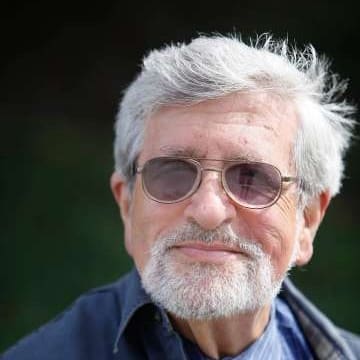
The Berkeley musicologist Richard Taruskin died on 1 July 2022, in Oakland from esophageal cancer at the age of 77. He is survived by his wife Cathy Roebuck Taruskin, a son, Paul Roebuck Taruskin, a daughter, Tessa Roebuck Taruskin, and two grandchildren. After attending the High School of Music & Art in Manhattan, he was both an undergraduate and graduate student at Columbia University, where he received his PhD in 1976. Until 1986 he taught at his alma mater. During his New York years he played viola da gamba in the Aulos Ensemble and founded the choral group, Cappella Nova, with which he recorded many Renaissance compositions for the first time. In 1987 he joined the Music Department at UC Berkeley, where he taught until his retirement in 2014. He was one of the most prominent musicologists of his generation. Among the many honors and awards he received are two Kinkeldeys (1997, 2006), a Guggenheim Fellowship (1986) and a Dent Medal (1987), and most importantly the Kyoto Prize in Arts and Philosophy (2017)—the first time this prestigious award was won by a musicologist.
A lively stylist, Taruskin was never boring, whether he wrote for the New York Times, the New Republic, or a scholarly journal. He loved controversy, and sometimes did not fully understand that his adversaries might take his criticism personally. His wit was legendary. He published in a wide variety of fields. As a scholar of early music he edited Antoine Busnoys: The Latin-Texted Works (2 vols., 1990), and wrote a number of pathbreaking articles on performance practice eventually published as Text and Act: Essays on Music and Performance, successfully challenging the notion of authenticity in early music performance. His books and articles on Russian music, his main research area, changed the field. Russian music was an esoteric subject before Taruskin. He made it central, vital and exciting. His monumental two-volume book Stravinsky and the Russian Traditions: A Biography of the Works through Mavra (1996) revealed the full extent of Stravinsky’s debt to his Russian heritage, something the composer was not eager to publicize. Equally important is his six-volume Oxford History of Western Music (2005), a major tour-de-force and a real page turner, particularly impressive in its earlier volumes.
In his late years, Taruskin took daily walks, usually accompanied by family and friends, at Point Isabel in Richmond. A bench there will be dedicated to his memory. Thanks to him the Bay Area had one of the most lively musicological communities. I am certain that I am not alone when I say that his writings and the many conversations we had influenced my thinking in a major way. We will all miss his invigorating presence.
While I was writing this obituary, I watched his memorial service at UC Berkeley and I strongly recommend that you watch it, too, particularly the first thirty minutes of a summary of his life compiled by his daughter Tessa Taruskin, where you can hear his numerous recordings as a gamba player and with the Cappella Nova. I knew he was a giant of our discipline and a dear friend, but now I also know that he was a superb musician.
Anna Maria Busse Berger