On 9 May 2026, 20:00 UTC, the IMS will hold its first “Spark Event,” streamed online to audiences across the globe from Córdoba (AR)! The stream will be open to everyone—feel free to share it widely.
Jesuits and Amerindians: A Hybrid Music
Since the “discovery” of a large repertoire of vocal and instrumental music in the former Jesuit Missions of Chiquitos (present-day Bolivia), Early Music performers around the world have been performing many of its sonatas, songs, and motets, in concert and in recordings, according to the practices of European eighteenth-century music. This accords with the contemporary reports written by Jesuits and their supporters. However, during Moritz Bach’s residence in the area in the 1830s, he heard something totally different, which he dubbed “monstrous orchestra” in which the Western instruments of the Jesuit chapel were combined with drums, triangles, and all kinds of indigenous aerophones in a perfect synthesis of Old and New Worlds. There are hints in documentation supporting Bach’s belief that this had been the practice even before the Jesuits were expelled in 1767. Large orchestras and choir, multiple sonorous harps, doubling of violins with shawms, “fauve-colored” organ sonorities, large and small cane flutes, clappers, maracas made with armadillo shells, and tuned bells must have produced an altogether different sound. Different from current renditions of this repertory and different from contemporary European musicking.
Our project attempts to re-create sonorities that evoke the aesthetics of those practices, without proposing the impossible—a faithful reproduction of eighteenth-century events. For that purpose, we have invited a social orchestra rather than a professional one, a children’s choir rather than a mixed choir of adults, and a few practicing early music instrumentalists to provide contemporary instruments. We would like to hope that the listeners will experience something of what Bach called “überirdisches oder vielmehr etwas unterirdisches”—in any case, something out of the ordinary.
Leonardo Waisman
Retired Research Fellow at CONICET • Argentina
How to Use Auto-Translate on YouTube
The talk will be delivered in Spanish, with YouTube offering the option to enable automatically translated subtitles.
- Desktop/Laptop: Click the CC icon on the video player, then click the Settings (gear) icon. Select Subtitles/CC → Auto-translate and choose your language.
- Mobile: Tap the video, tap the CC icon to turn on captions, then tap Settings → Captions → Auto-translate.
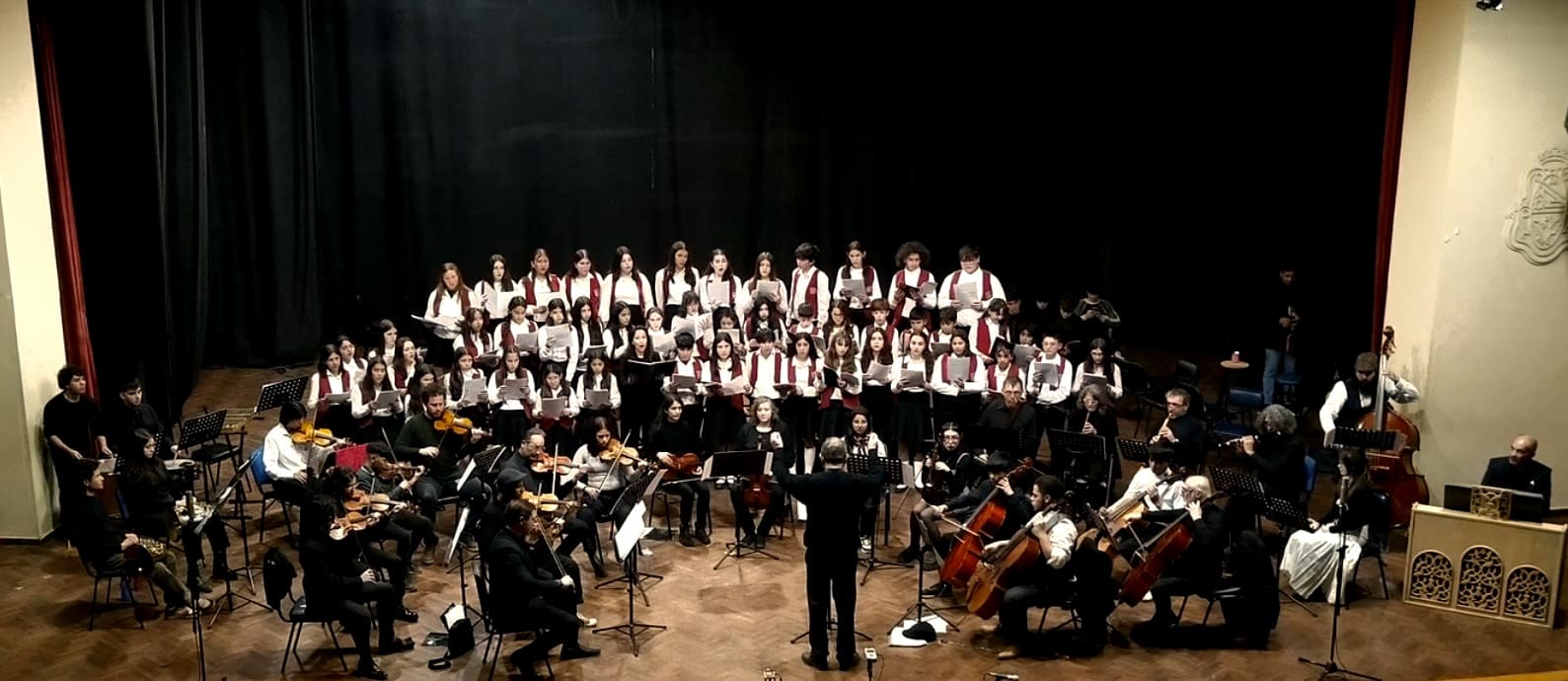
Rehearsal at the Jesuity site of the Universidad Nacional de Córdoba.